Throughput Is Your Hidden Weapon (and Most of You Are Firing Blanks)
The Weekend That Started This
There's a moment, somewhere between your second pint and the slow, creeping death of your patience, when you realise something's gone badly wrong. Not with the beer. The beer's fine. It's the machine behind it.
I've just come back from a weekend in Newcastle upon Tyne, a city that knows how to drink, knows how to party, and should, by all rights, know how to run a bar. And yet, bar after bar, the same slow motion car crash played out in front of me. Queues stacking up like unpaid invoices, bartenders moving like they're underwater, four deep at the bar while perfectly good taps sit idle, unloved, like a forgotten side hustle that no one quite got round to sorting out.
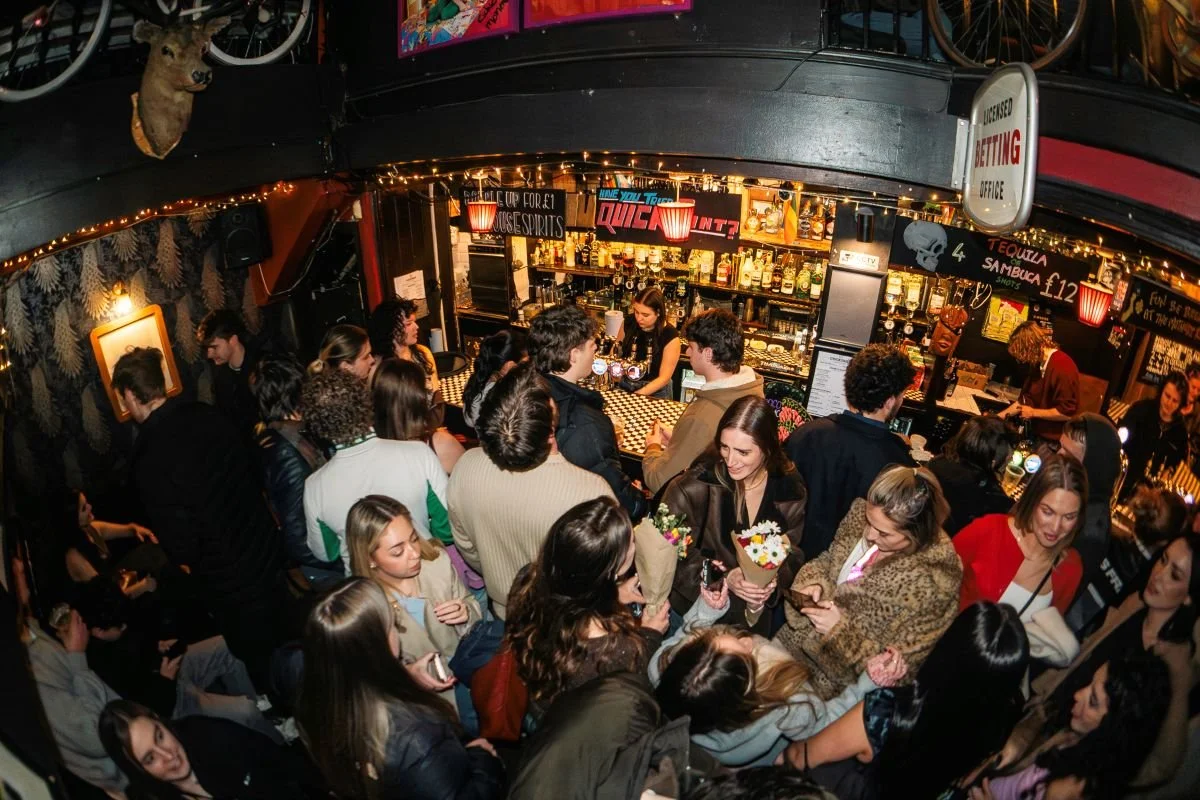
Then back in Bristol the next day, and it's like déjà vu with worse lighting. Packed room, band on, proper energy, the kind of night operators dream about when they're staring at a miserable midweek P&L. And the bar is still painfully, stubbornly slow. I'm standing there thinking this place should be printing money right now, the tills should be rattling, the glass washer should be screaming for mercy, and instead it feels like everything's happening at half speed. Not because people don't want to spend, but because the system physically won't let them.
It's Not Your Staff. It's Your System.
Everyone loves to blame staff because it's easy and it lets you off the hook. They're too slow, they don't care, they're not trained, all the usual greatest hits that get trotted out when things aren't working. But most of the time your staff are doing exactly what your system allows them to do, which is not very much. They're operating inside a badly designed machine, and you're expecting them to magically overcome that with enthusiasm.
Throughput isn't something that just happens on the night. It's baked in long before the first punter walks through the door. It lives in the bones of the place, in how the bar is laid out, where the glassware sits, how far someone has to move to grab ice, whether the tills create friction instead of flow, whether anyone has actually thought about how people move in that space when it's busy. It's also in how your team has been trained, or more often not trained, just left to muddle through and pick it up by osmosis. If your bar looks like it was designed by someone who's never actually worked a Saturday night, then you've already made your decision about how much money you're willing to leave on the table.
The Maths Is Brutal
This is where it stops being frustrating and starts being offensive. You've got a full room, say one hundred and fifty people, all of them ready to spend, all of them in the mood, all of them effectively raising their hands and saying take my money. Average drink price six or seven quid, nothing outrageous, just steady volume. But if your bar is running at half its potential, and that's exactly what it felt like this weekend, you are literally giving away half your revenue in real time.
Not on paper. Not in some theoretical model. Right there, in front of your eyes, every minute the queue doesn't move properly. People don't wait forever. They drift off, they settle for less, they grab a bottle instead of a pint because it's quicker, or they just decide they've had enough of standing there watching the chaos and they go somewhere else next time. And the thing everyone calls vibe, that intangible magic you can't quite define but you know when it's there, that dies a very quick death when someone has been stood at a bar for fifteen minutes watching a bartender hunt for a clean glass like it's buried treasure.
Speed Is Trained, Not Born
There's this idea that speed is somehow innate, that you either have it or you don't, that it's about attitude or personality or whether someone's a grafter. It isn't. Speed is trained. Urgency is drilled. It's taught, reinforced, expected, and then it becomes part of how a place operates.
You build a culture where people move with purpose, where they keep their heads up, where they're reading the bar rather than reacting to it, where drinks are batched without anyone having to explicitly call it out, where the whole thing starts to feel like a production line rather than a collection of individuals doing their own thing. Or you don't, and what you end up with is a kind of slow, well intentioned wandering, people busy but not effective, effort without output.
I've seen kids barely out of school absolutely tear through a four deep bar because someone showed them how to stand, how to move, how to prioritise, what matters and what doesn't. And I've seen people with years behind them grind a service to a halt because no one ever taught them urgency, so they default to whatever feels comfortable, which is almost always slower than it needs to be.
Throughput Is Choreography
Most bars are set up in a way that actively fights against speed, and then everyone wonders why service feels like hard work. You step behind and nothing is where it should be. Glasses are miles from where drinks are poured, ice is an expedition, staff are constantly crossing over each other, the tills create choke points instead of flow, your best selling products aren't where they need to be, so every order becomes a tiny journey rather than a smooth, repeatable action.
No amount of shouting let's go or come on we need to pick it up is going to fix a layout that fundamentally doesn't work. Throughput is choreography. It's about designing a space where movement is natural, where people don't collide, where everything you need is exactly where you expect it to be. If it doesn't feel like a dance when it's busy, if it feels like a scrum, then you've built the wrong thing.
That bar in Bristol had everything going for it. Full room, great band, people in the mood to spend, the kind of night you can build a reputation on. And then the menu gets in the way. Too clever, too involved, too many steps between order and drink. When you're quiet, you can get away with that. When you're rammed, it's a liability.
You don't need complexity in those moments. You need speed, repeatability, things that can be executed without thinking too hard. The more decisions you force your staff to make, the more time you add to every transaction, the more you choke your own throughput. There's a reason the busiest, most successful bars in the world simplify when it matters. It's not because they lack imagination. It's because they understand exactly where the money is made.
Stop Guessing. Start Looking.
Put two bars on the same street with the same rent, the same footfall, the same opportunity. One understands throughput, has built for it, trained for it, designed for it. The other hasn't, and leans on atmosphere and good intentions to carry it through.
One of those businesses will quietly, consistently outperform the other. It will take more money on the same nights, serve more people in the same hours, create a better experience simply by not making people wait unnecessarily. The other will wonder why it never quite feels like it's hitting its potential, why the numbers don't reflect how busy it looks, why things feel harder than they should.
Throughput isn't glamorous. You don't see it in a nicely framed Instagram post. But it is the difference between a business that works and one that constantly feels like it's pushing uphill.
At some point you have to stop guessing and actually look. Stand in your own bar on a busy night and watch it properly. Feel where it drags, where it bunches up, where people get stuck. Pay attention to how long it takes to get served, how often staff have to move unnecessarily, how many tiny inefficiencies stack up into something much bigger.
Because right now, in bars all over the place, rooms are full, demand is there, and operators are still somehow managing to take half of what they could, all while blaming everything except the thing that's right in front of them.
You don't have a marketing problem. You don't have a pricing problem. You've got a throughput problem. And until you deal with it, you're just standing there watching money walk away.