Whoever Said “Hope Is Not a Business Plan” Never Worked in Hospitality
“Hope is not a business plan” is one of those phrases that gets thrown around by business consultants with polished shoes and immaculate calendars. It usually arrives halfway through a PowerPoint presentation full of hockey-stick graphs, optimisation matrices, and the sort of language that makes you wonder whether anybody involved has ever actually had to run a business where the stock can go off, the staff can call in sick, and a rainy bank holiday can wipe twenty grand off your forecast.
And on paper, they are absolutely correct.
Hope is not forecasting. Hope is not cashflow management. Hope is not labour control, systems design, operational discipline, procurement strategy, debt management, or leadership structure. You cannot pay HMRC with positive thinking. Your electricity supplier does not accept “good vibes” as settlement terms. The brewery dray does not arrive with your delivery because you manifested abundance.
The Brutal Reality of the Ledger
Hospitality operators know this better than anybody because we live closer to financial reality than most industries ever have to. We see the numbers daily. Hourly, sometimes. A bad lunch service can sour the mood of an entire building. Three quiet Fridays in a row can trigger genuine fear. Margins in hospitality are so thin now that one badly managed weekend can undo a month of good work. We know exactly how brutal the maths can be because we are forced to stare directly at it all the time.
But despite all of that, hospitality still runs on hope.
Not blind hope. Not stupidity. Not the sort of optimism peddled by motivational speakers in slim-fit suits telling people to “dream bigger” before disappearing back to a Marriott conference room. Hospitality runs on a very specific kind of hope. A hardened, scarred, practical optimism that develops over years of surviving things that probably should have killed the business but somehow did not.
Gloriously and Catastrophically Human
Because no matter how good your systems are, hospitality remains gloriously and catastrophically human.
You can forecast your labour down to the quarter hour. You can engineer menus for margin. You can negotiate supply deals, optimise your rota, build detailed SOPs, train your managers brilliantly, and still get absolutely blindsided by things completely outside your control. The weather changes. A train strike gets announced. Roadworks appear outside your building for six months. A viral TikTok convinces half your customer base they should suddenly be eating something else. A key chef leaves. A licensing issue drags on. A utility bill doubles overnight because the world has collectively decided energy now costs the GDP of a small nation.
And still, every morning, people open hospitality businesses anyway.
That is the part outsiders never really understand.
Every day, somebody unlocks the doors to a pub, café, restaurant, music venue, brewery, cocktail bar, nightclub, burger restaurant, or sandwich shop and effectively says: “Right then. Let’s go again.”
The Weight of Emotional Exposure
There is something almost irrational about it.
Most industries do not operate with this level of emotional exposure. If a software company has a slow Tuesday, nobody notices. If a pub has a slow Tuesday, you can feel it physically. The room changes shape. The silence becomes heavier. Staff start wiping already clean surfaces with increasing intensity. Managers begin refreshing sales reports every twelve minutes like gamblers checking horse racing odds.
Hospitality is immediate. There is nowhere to hide.
You are effectively putting on a live performance every single day, and your audience decides in real time whether they care. They vote with their feet, their wallets, their reviews, and increasingly with their attention spans. The modern customer has more choice than ever before and less loyalty than ever before. You are competing not just against the pub down the road, but against Netflix, supermarket meal deals, food delivery apps, rising mortgage payments, social media dopamine addiction, and simple exhaustion.
Yet the strange thing is that the businesses which survive longest are rarely the ones run purely by spreadsheets.
More Than Calories and Alcohol
The best operators know the numbers obsessively, but there is usually something else underneath it all. A kind of stubborn belief that what they are building matters. A belief that atmosphere matters. That community matters. That people still fundamentally crave places where they can gather together and feel something.
The hospitality industry has spent years being talked about as though it is frivolous. As though pubs, restaurants, bars, cafés, and music venues are somehow optional luxuries sitting outside “real” economic life. But anybody who has ever actually worked in the trade knows that is nonsense.
Hospitality is where people go to celebrate births, birthdays, engagements, promotions, anniversaries, and weddings. It is where they go after funerals. It is where relationships begin and where relationships end. It is where friendships are built, business deals are done, bands are discovered, and lonely people briefly stop feeling lonely.
We do not just sell food and drink.
We sell relief.
Relief from isolation. Relief from routine. Relief from work, stress, grief, boredom, heartbreak, anxiety, and the low-level exhaustion of modern life. The best hospitality businesses create temporary worlds people want to disappear into for a few hours. A good pub can feel safer than therapy to some people. A great restaurant can become part of the architecture of somebody’s life.
Chasing the Hum
That is why hospitality people continue despite the punishment.
And punishment is the correct word for it sometimes.
The last few years alone would have finished off saner industries. Pandemic closures. Staffing crises. Inflation. Energy costs. Supply chain chaos. Spiralling rents. Reduced consumer spending. Rising taxation. Rising wages. Rising expectations. Shrinking margins. Constant pressure from every possible direction. Hospitality operators have been expected to absorb blow after blow while somehow maintaining standards, smiling through service, and continuing to provide experiences that feel effortless to the customer.
There is a reason so many hospitality people look permanently tired. Even the successful ones.
Because unlike many industries, hospitality does not really allow you to emotionally detach from the outcome. The room either works or it does not. The atmosphere either exists or it does not. You can feel success in real time, and you can feel failure in real time too.
But then occasionally, everything clicks.
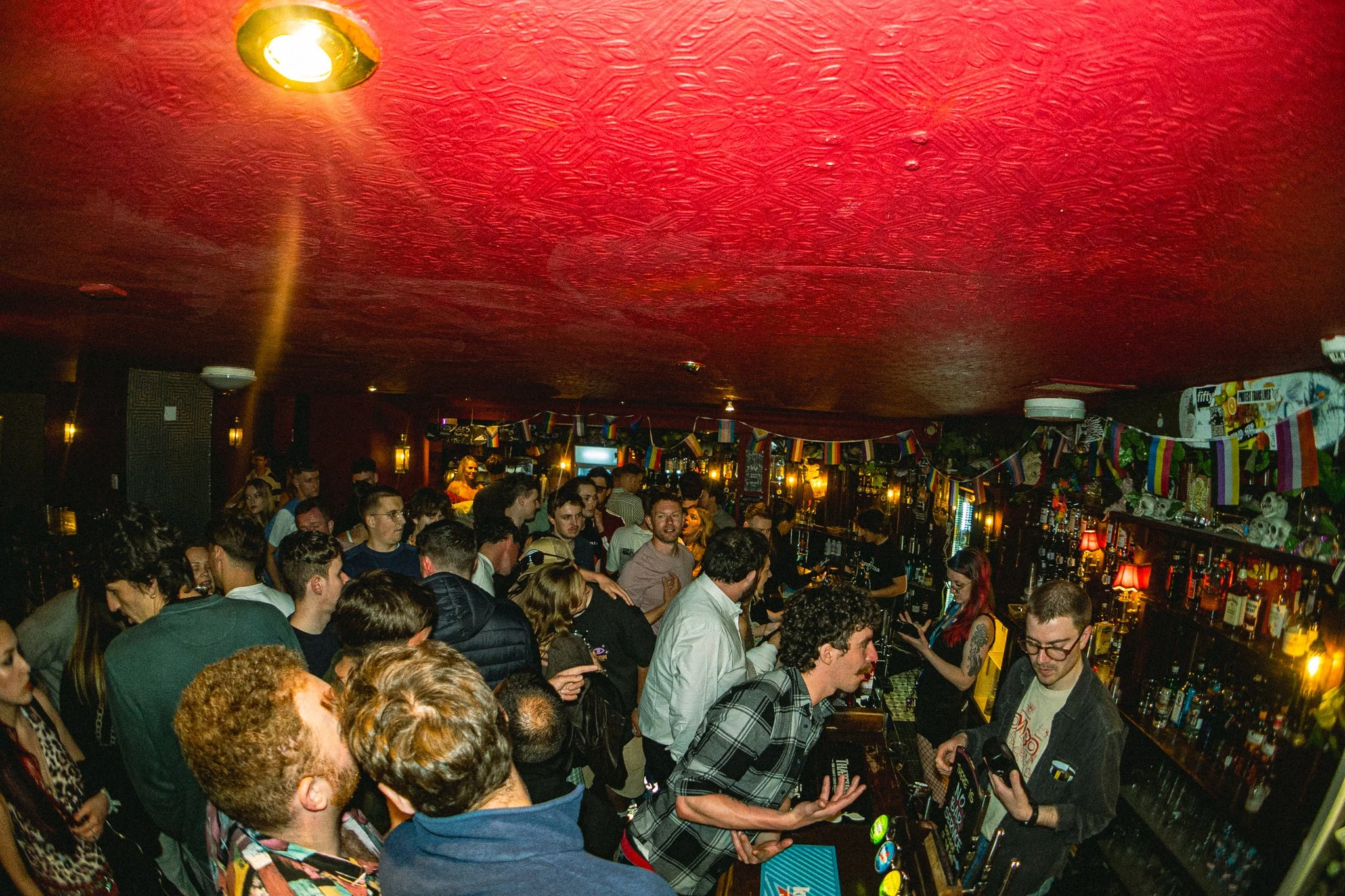
The music sits perfectly in the room. The staff are flying. The bar is three deep but nobody minds waiting because the energy feels good. Food is landing cleanly. Tables are laughing. Glasses are clinking. Somebody orders another bottle. Somebody stays for one more drink. A couple on a first date forgets to check their phones for two hours. The entire building suddenly hums with life.
Those moments are what hospitality operators chase.
Not money alone. Not scale alone. Not growth alone.
That feeling.
The feeling that for a few hours, you managed to build somewhere people genuinely wanted to be.
When the Soul Leaves the Room
And the truth is, you cannot build something like that without hope.
You need systems, of course. You need operational excellence. You need financial discipline so tight it sometimes feels paranoid. You need standards. You need structure. The romantic myth of the chaotic hospitality genius usually ends with unpaid VAT and locked doors.
But systems alone are not enough.
Cold logic has never built a legendary pub.
Pure financial caution has never created a venue people fall in love with.
At some point, every hospitality operator makes decisions that only really make sense if you believe tomorrow can still be better than today. You refurbish the room when the easy option would be to leave it tired. You invest in better sound, better lighting, better training, better ingredients, better people. You take risks on new concepts. You launch ideas that might fail. You continue pushing because you believe the experience can still improve.
That belief is hope.
And without it, hospitality collapses into pure transaction. Just calories and alcohol moved from one side of a counter to another.
The industry becomes sterile when it loses hope. You can always tell when a venue no longer has it. The lights get brighter. The music gets safer. The menus become engineered by committee. The room loses soul. Everything starts feeling designed purely to protect margin rather than create experience.
The Foundation of the Plan
The truly great hospitality businesses never lose the optimism underneath the machinery.
Even when they are exhausted.
Even when the numbers are frightening.
Even when the industry feels impossible.
They still believe in the room.
That is why the phrase “hope is not a business plan” has always felt slightly incomplete to me.
Because in hospitality, hope is not the whole business plan.
But it is absolutely the reason the plan exists in the first place.